

Last modified: March 26, 2026
Choosing the right shoes for disc golf has a much bigger impact than many players realize. Courses vary enormously, from dry desert layouts and hard‑packed park courses to muddy woodland fairways, rocky mountain terrain, and slick concrete tee pads. A shoe that works perfectly in one region can feel completely wrong in another.
Because of that variety, disc golf shoes need to balance grip, comfort, durability, and – depending on where you play – water protection. The goal isn’t to find the “best” shoe overall, but the best shoe for your climate, your local courses, and the way you play.
What kind of shoes do most disc golfers use?
For most American players, low‑cut hiking shoes have become the default choice. They provide noticeably better traction and durability than regular running shoes while still feeling light and flexible enough for long rounds. On wooded courses, mixed dirt and grass fairways, and concrete tee pads, hiking shoes tend to feel stable without being bulky.
Trail running shoes are also common, especially in drier parts of the country like California, Arizona, Colorado, and Texas. Players who prefer faster rounds and lighter footwear often gravitate toward trail runners because they offer excellent grip and ground feel. The tradeoff is durability. Aggressive toe drag and repeated rotation on tee pads can wear them down faster than hiking shoes.
In recent years, disc golf-specific shoes have started gaining real traction. These are designed around the actual mechanics of the sport, with reinforced toe areas, rotational traction zones, and support tailored to throwing rather than hiking or running. They aren’t for everyone, but many competitive players swear by them.
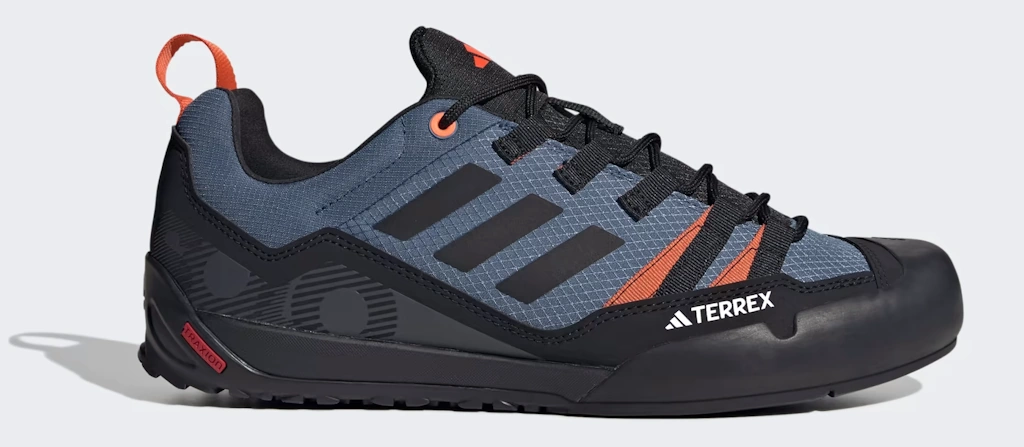
Popular disc golf shoes
One of the most commonly seen shoes on American courses is the Adidas Terrex Swift R3 GTX. It’s a low‑cut hiking shoe that feels stable on concrete tee pads and confident on dirt and rock. The Continental rubber outsole provides reliable grip in both wet and dry conditions, and the GORE‑TEX version is especially popular in regions where morning dew, rain, and mud are common. In the U.S., this model typically sells in the $140 to $170 range and is widely available through Adidas, REI, Amazon, and major outdoor retailers.
Another longtime favorite among players is the Merrell Moab 3. Comfort is the main reason people keep coming back to it. The Moab line is known for being forgiving right out of the box, which matters when a single round can involve several miles of walking. The GORE‑TEX version is especially popular in wetter regions, while the non‑waterproof model works well in dry climates. Prices usually land between $130 and $145 for the standard version and $160 to $180 for GORE‑TEX. One major advantage is availability, as the Moab 3 is easy to find at Merrell, REI, Amazon, Walmart, and even some department stores.
See also: Two databases that make life easier
For players who deal with mud, steep hills, or soft ground, the Salomon Speedcross 6 is a common sight. Technically it’s a trail running shoe, but its aggressive lug pattern gives it outstanding traction in loose and slippery conditions. On muddy courses, few shoes grip the ground as well. The downside is that it’s less durable for heavy toe drag, especially on concrete. The Speedcross 6 usually sells for around $145 to $150, with the waterproof GTX version costing more. It’s widely available from Salomon directly, REI, Amazon, and sporting‑goods chains like Cabela’s.
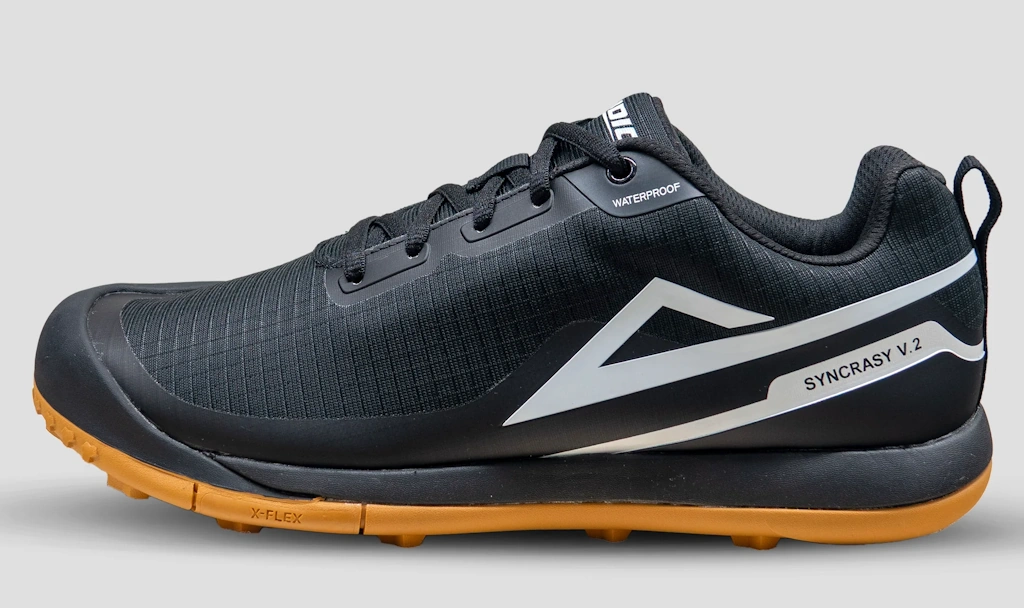
Among shoes built specifically for disc golf, the Idio Syncrasy V2 stands out. It’s designed from the ground up for disc golf movements, with reinforced toe protection, rotational grip zones, and a waterproof liner. Many top professionals wear it in competition, and it’s especially popular with players who put a lot of torque into their throws. The Syncrasy V2 typically sells for about $135 and is sold primarily direct‑to‑consumer through Idio Sports, rather than large retail chains.
Mobile tip: Rotate your phone sideways to view the full table.
| Brand | Model | Price (standard) | Price (waterproof) | U.S. retailers |
|---|---|---|---|---|
| Adidas | Terrex AX4 GTX | — | $120–$140 | Adidas |
| Adidas | Terrex Free Hiker 2.0 Low GTX | — | $180–$200 | Adidas • REI |
| KEEN | Terradora II Mid WP (Women’s) | — | $140–$160 | KEEN • Amazon |
| Merrell | Moab 3 GTX | — | $160–$180 | Merrell • REI |
| Merrell | Trail Glove 7 | $120–$130 | — | Merrell • REI |
| Nike | Kiger 9 | $140–$150 | — | Nike • Running Warehouse |
| Nike | Pegasus Trail 5 | — | $160–$170 | Nike • REI |
| Salomon | Speedcross 6 | $145–$150 | $165–$175 (GTX) | Salomon • REI |
| Vans | UltraRange EXO | $90–$100 | — | Vans • Zappos |
| Vans | UltraRange NEO VR3 | $105–$115 | — | Vans • Zappos |
Prices checked: Typical U.S. retail pricing (March 2026). Sale prices may vary by retailer and season.
How conditions affect shoe choice
Where you play matters a lot. In the Pacific Northwest, the Midwest, and much of the East Coast of the U.S., waterproof shoes are often worth the extra money. Morning dew, rain, and muddy fairways can soak non‑waterproof shoes quickly. In contrast, players in the Southwest or Southern California often prioritize breathability over waterproofing, since heat and dry ground are the bigger challenges.
Courses with significant elevation changes or rocky terrain tend to reward shoes with more structure and grip, while flatter park‑style courses allow for lighter, more flexible options. Concrete tee pads also play a role, since durable rubber outsoles hold up better and feel more secure during drives.
Budget options for new players
For players just getting into disc golf, there’s no need to spend top dollar right away. Several trail shoes under $120 offer decent grip and comfort for casual play. Models like the Adidas Terrex Agravic TR, Salomon Trailster, and New Balance Nitrel are commonly found on sale and work well on dry courses. These shoes are lighter and more breathable, but they usually lack waterproofing and won’t last as long if you play frequently or throw with heavy toe drag.
See also: Getting started with disc golf
Final thoughts
There isn’t a single shoe that’s perfect for every disc golfer. Most players end up happiest in low‑cut hiking shoes, while those in dry climates often prefer trail runners. Disc golf–specific shoes make the most sense for competitive players who want gear designed specifically for the sport.
In the end, the best shoe is the one that fits your foot well, matches your local conditions, and lets you focus on your throws instead of your footing.